



DESTINY-Breast06: Efficacy Results (March 18, 2024 DCO Date)
Progression-Free Survival1
-
PFS in HER2-low Population
-
PFS in ITT Population (HER2-low and HER2-ultralow)
-
PFS in HER2-ultralow Population
PFS by BICR in the HER2-low Population1
PFS by BICR in the HER2-low Population1
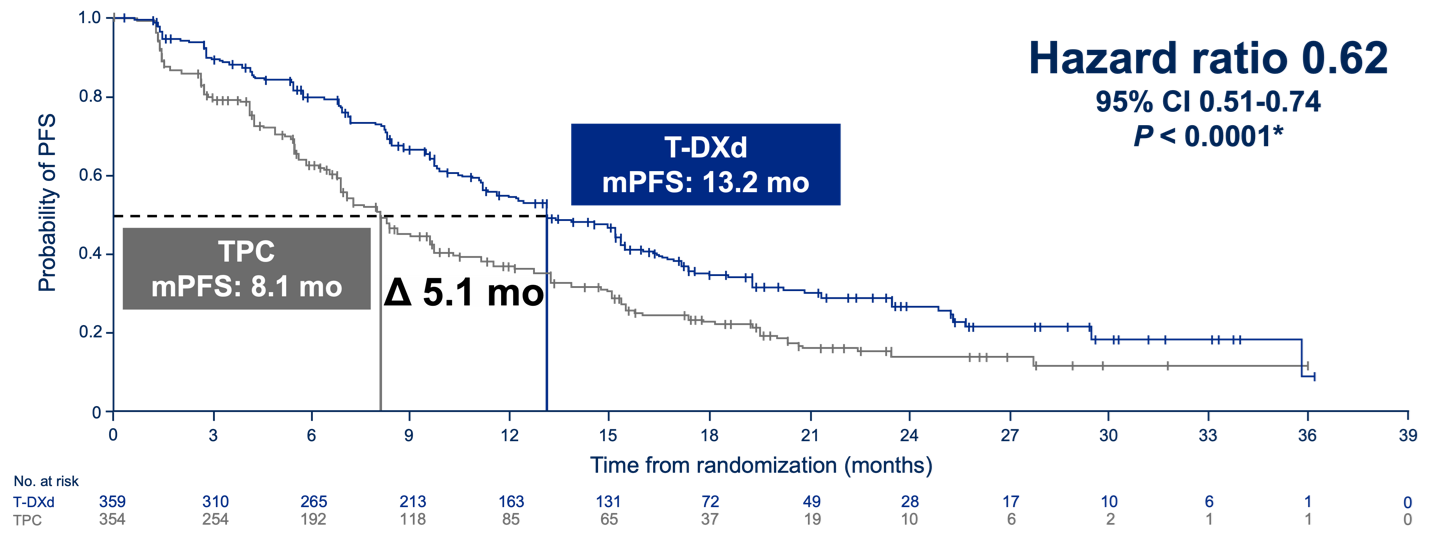
*P-value of <0.05 required for statistical significance.
T-DXd demonstrated a statistically significant and clinically meaningful improvement in PFS compared with standard-of-care chemotherapy in HER2-low
PFS by BICR in the ITT population1
PFS by BICR in the ITT population1
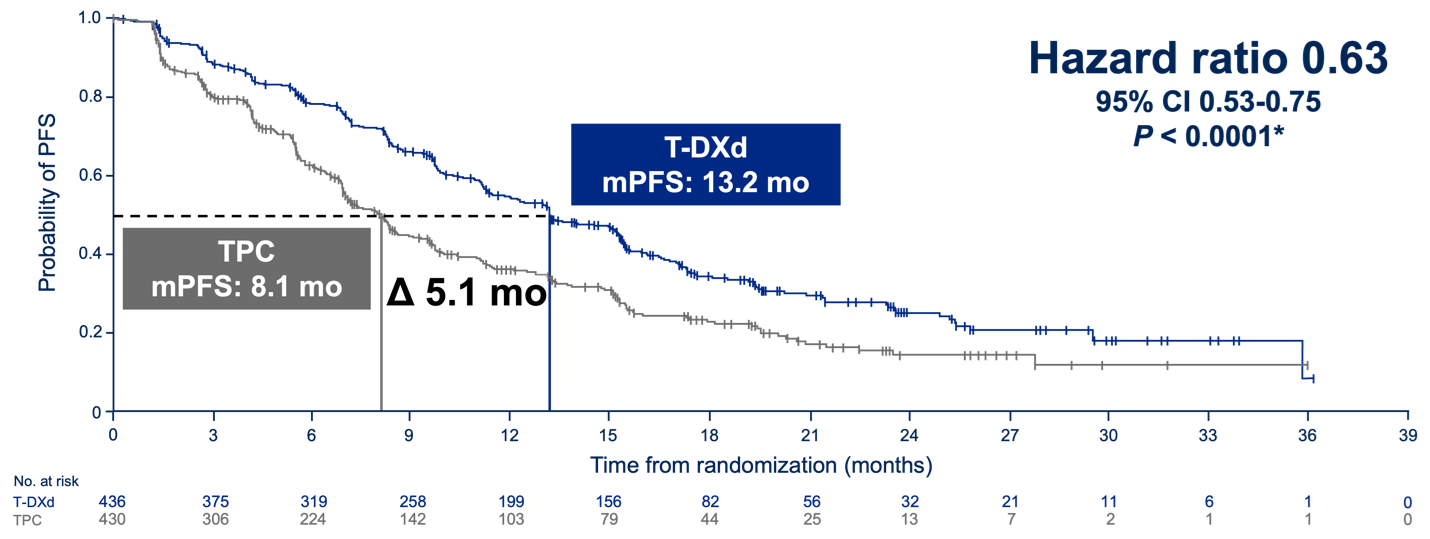
*P-value of <0.015 required for statistical significance.
T-DXd demonstrated a statistically significant and clinically meaningful improvement in PFS compared with standard-of-care chemotherapy in ITT
PFS by BICR in the HER2-ultralow Population1
PFS by BICR in the HER2-ultralow Population1
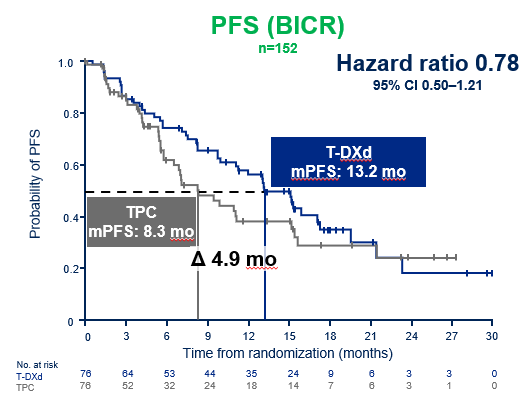
PFS improvement with T-DXd vs TPC in HER2-ultralow was consistent with results in HER2-low
Overall Survival1
-
OS in HER2-low Population
-
OS in ITT Population (HER2-low and HER2-ultralow)
-
OS in HER2-ultralow Population
OS in the HER2-low Population: key secondary endpoint (~40% maturity)1
OS in the HER2-low Population: key secondary endpoint (~40% maturity)1
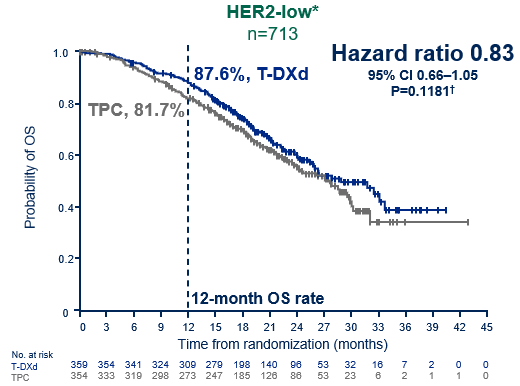
*39.6% maturity (of total N for population) at this first interim analysis. Median duration of follow up was 18.6 months (HER2-low).
†p<0.0046 required for statistical significance.
20.1% of patients in the TPC group received T-DXd post treatment discontinuation (HER2-low)
OS in the ITT (HER2-low and HER2-ultralow) Population: key secondary endpoint (~40% maturity)1
OS in the ITT (HER2-low and HER2-ultralow) Population: key secondary endpoint (~40% maturity)1
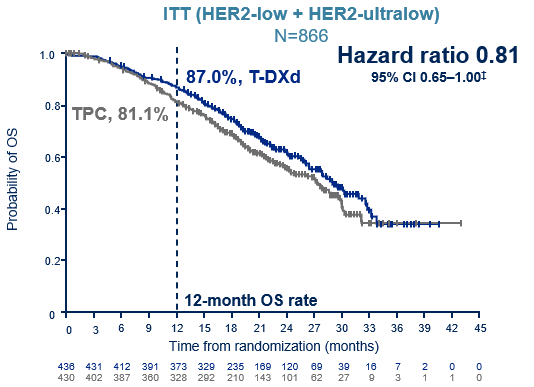
‡No test of significance was performed in line with the multiple testing procedure. Median duration of follow up was 18.2 months (ITT).
17.9% of patients in the TPC group received T-DXd post treatment discontinuation (ITT)
OS in the HER2-ultralow Population1
OS in the HER2-ultralow Population1
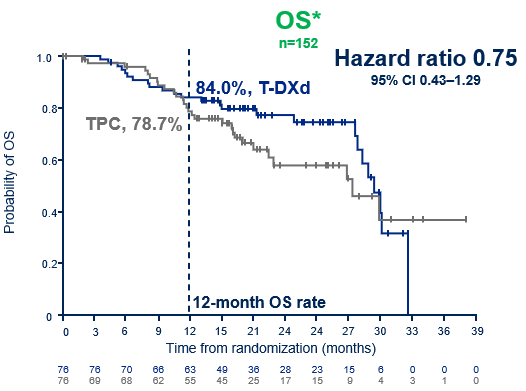
*34.9% maturity (of total N for population) at this first interim analysis. Median duration of follow up was 16.8 months (HER2-ultralow).
PFS in HER2-low: subgroup analysis1
PFS by BICR in the Prespecified HER2-low Subgroups 1
PFS by BICR in the Prespecified HER2-low Subgroups 1
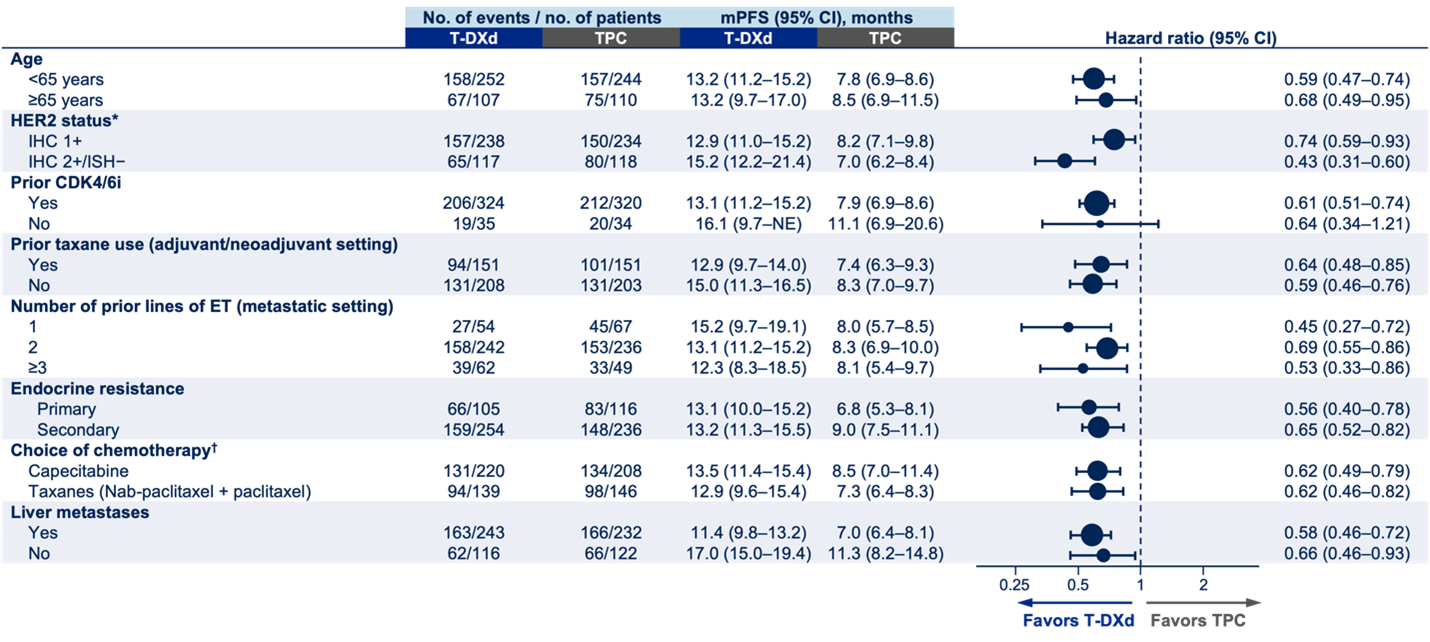
Size of circle is proportional to the number of events.
*Based on central laboratory data (ie, the HER2 result from the most recent evaluable sample prior to randomization).
†Specified by the investigator prior to randomization.
Antitumor Activity1
Response to Treatment in All Populations 1
Response to Treatment in All Populations 1
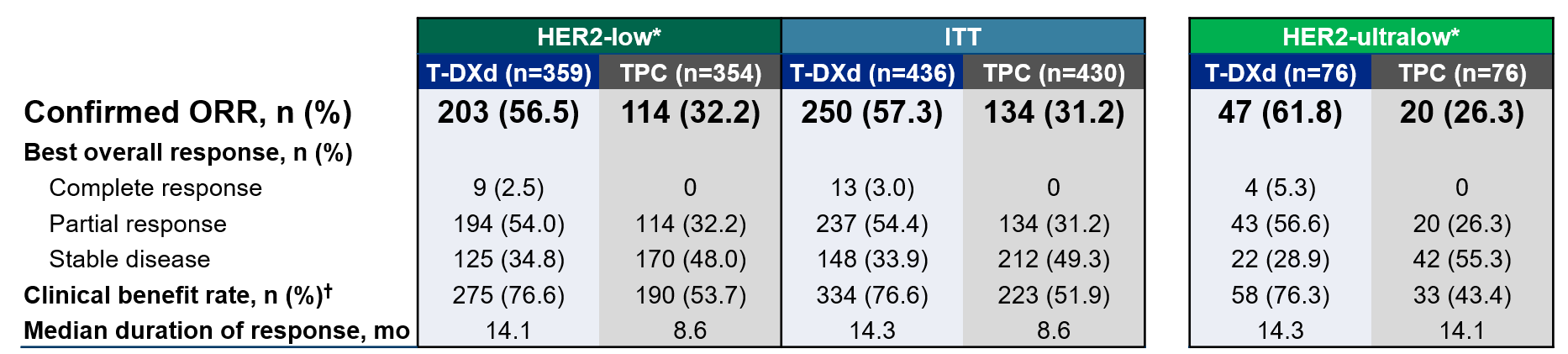
ORR based on RECIST v1.1; response required confirmation after 4 weeks.
*HER2-low status defined at randomization per IRT data, and HER2-ultralow status defined by central laboratory testing data.
†Defined as complete response + partial response + stable disease at Week 24, by blinded independent central review.
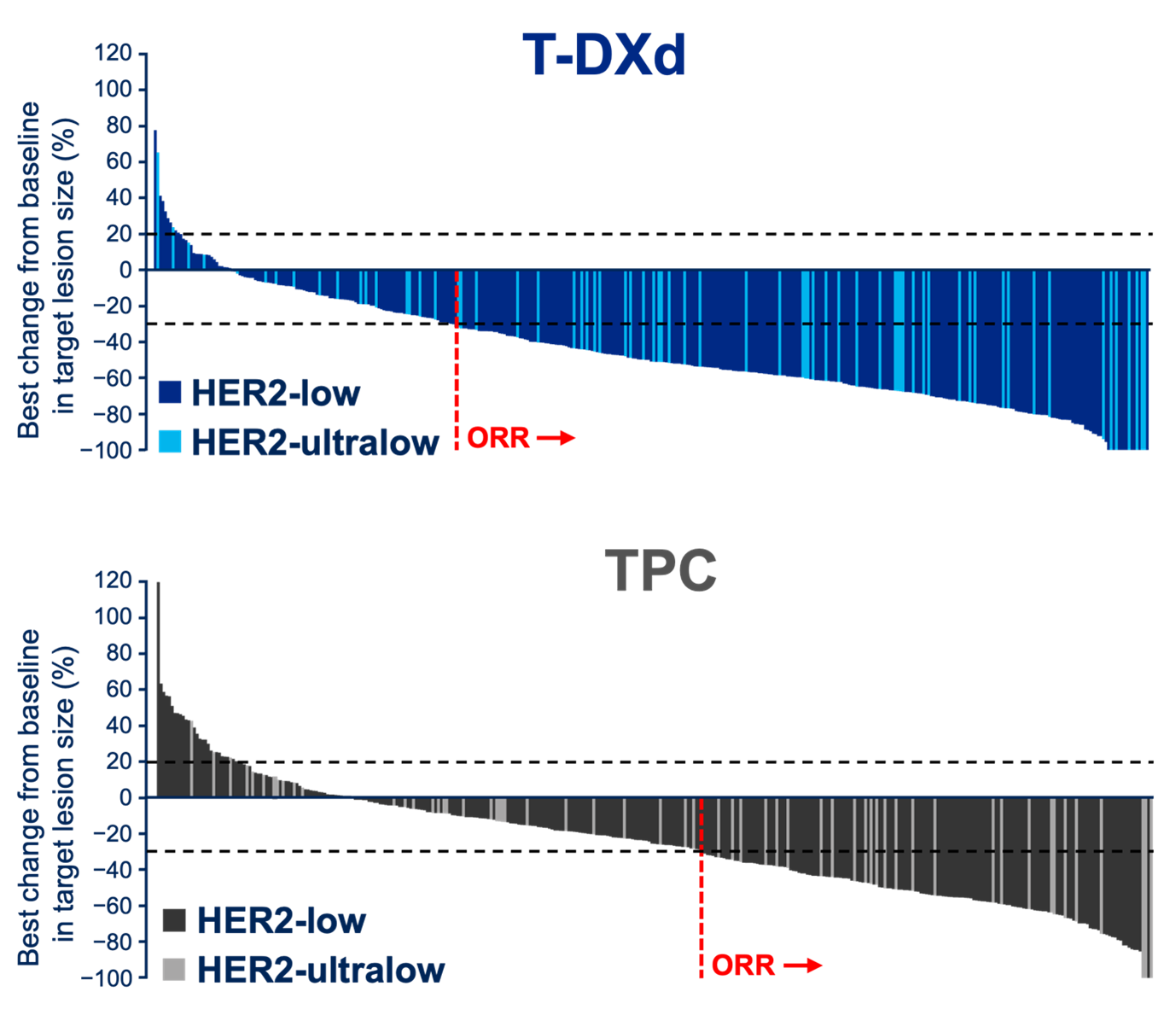
Best Percentage Change in Tumor Size From Baseline1
Best Percentage Change in Tumor Size From Baseline1
Abbreviations
BICR = blinded independent central review
;CDK4/6i = cyclin-dependent kinase 4/6 inhibitor
;CR = complete response
;DCO = data cut-off
;HER2 = human epidermal growth factor receptor 2
;IHC = immunohistochemistry
;ISH = in situ hybridization
;ITT = intent-to-treat
;mo = months
;mPFS = median progression-free survival
;NE = not evaluable
;ORR = objective response rate
;OS = overall survival
;PFS = progression-free survival
;PR = partial response
;SD = stable disease
;T-DXd = trastuzumab deruxtecan
;TPC = treatment of physician's choice
References
1. Curigliano G, Hu X, Dent R, et al. Trastuzumab deruxtecan vs physician’s choice of chemotherapy in patients with hormone receptor–positive, human epidermal growth factor receptor 2 (HER2)–low or HER2-ultralow metastatic breast cancer with prior endocrine therapy: primary results from DESTINY-Breast06. Presented at 2024 ASCO Annual Meeting; May 31-June 4, 2024; Chicago, Illinois. Presentation LBA1000.
Please note that this content may contain some data and/or patient populations which are considered off-label in your country. Providing this information does not constitute any recommendation for use. AstraZeneca is providing this material as an information service and professional courtesy.
To help us improve our content for health care professionals, please take this short survey.
Document ID: c791d159-0a5c-4180-b38f-cd5e26050804
Last updated: 28-June-2024

©2023 AstraZeneca. All rights reserved.