



DESTINY-Breast04 HEOR Analyses: Results (January 11, 2022 DCO Date)
Rationale for HEOR Analyses
- PROs and quality of life should be considered alongside efficacy and safety to better understand treatment impact and minimize patient burden during treatment selection
- In addition to adverse event reporting and clinical assessments made while on treatment to monitor patients’ health, DESTINY-Breast04 captured the patient’s assessment of how their disease and treatment affected other aspects of their well-being and daily functioning over time
PRO Endpoints and Analyses in the HR Positive Cohort
PRO Endpoints and Analyses in the HR Positive Cohort
PRO Endpoints and Analyses in the HR Positive Cohort
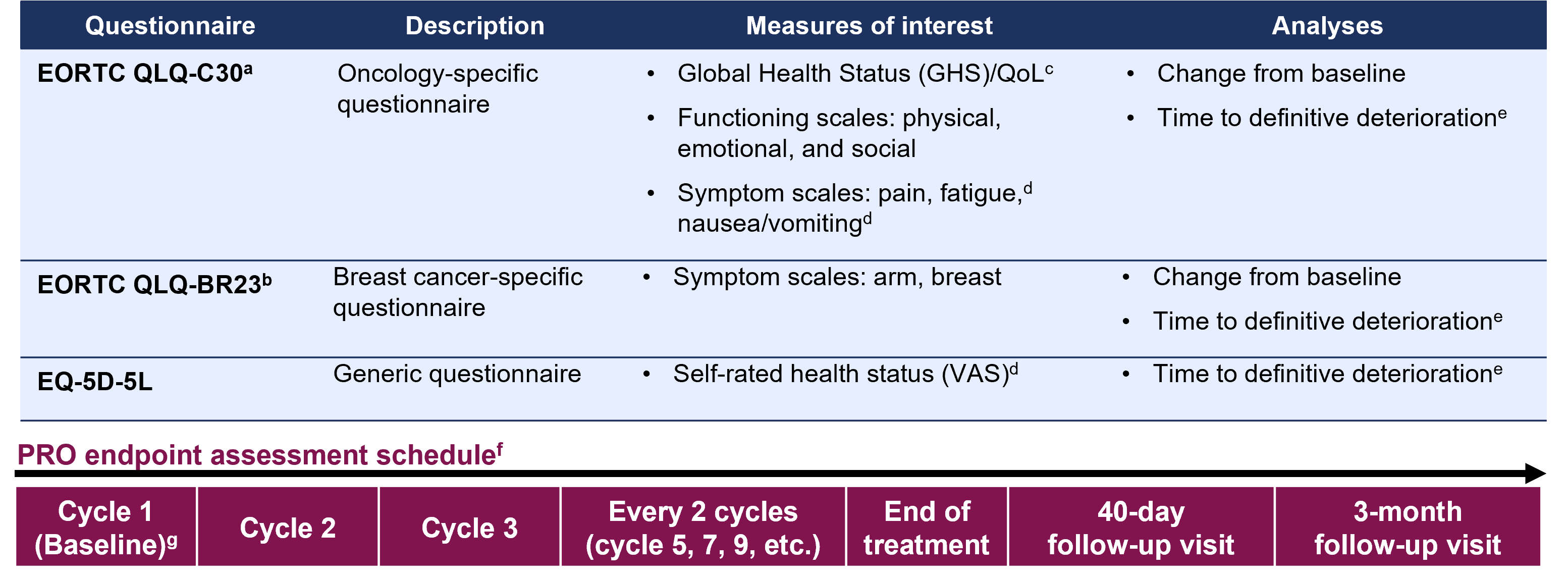
aSingle-item scales were also assessed: dyspnea, sleep disturbance, appetite loss, constipation, diarrhea, and financial impact; bAdditional symptom scales assessed: body image, sexual functioning, and systemic therapy side effects; cPrimary PRO variable of interest; dTDD of fatigue, nausea/vomiting, and EQ-5D-5L VAS were exploratory analyses; eClinically meaningful definitive deterioration is defined as a change of ≥10 points from baseline at either two or more consecutive time points, last PRO assessment, or death by the first survival follow-up visit; fPRO assessments began before infusion on Day 1 of Cycle 1; 1 cycle = 21 days; gBaseline PROs were completed after patients were aware of their treatment assignment.
PRO Results
GHS/QoL was maintained with T-DXd and TPC (QLQ-C30)
- Patient compliance for HRQoL questionnaires was >92% at baseline and >80% for cycles 2-27
- Mean baseline EORTC QLQ-C30 GHS scores were comparable between patients who received T‑DXd (36.3 ± [SD 21.8]) and TPC (37.8 ± [SD 22.5])
- Mean change from baseline for overall GHS/QoL remained stable (within ± 10 points) over the course of treatment with T-DXd up to 27 cycles and with TPC up to 13 cycles (until n <10% in patients with available CFB data, when results are no longer considered informative)
EORTC QLQ-C30 GHS Over Time in the HR-Positive Cohort.
EORTC QLQ-C30 GHS Over Time in the HR-Positive Cohort.
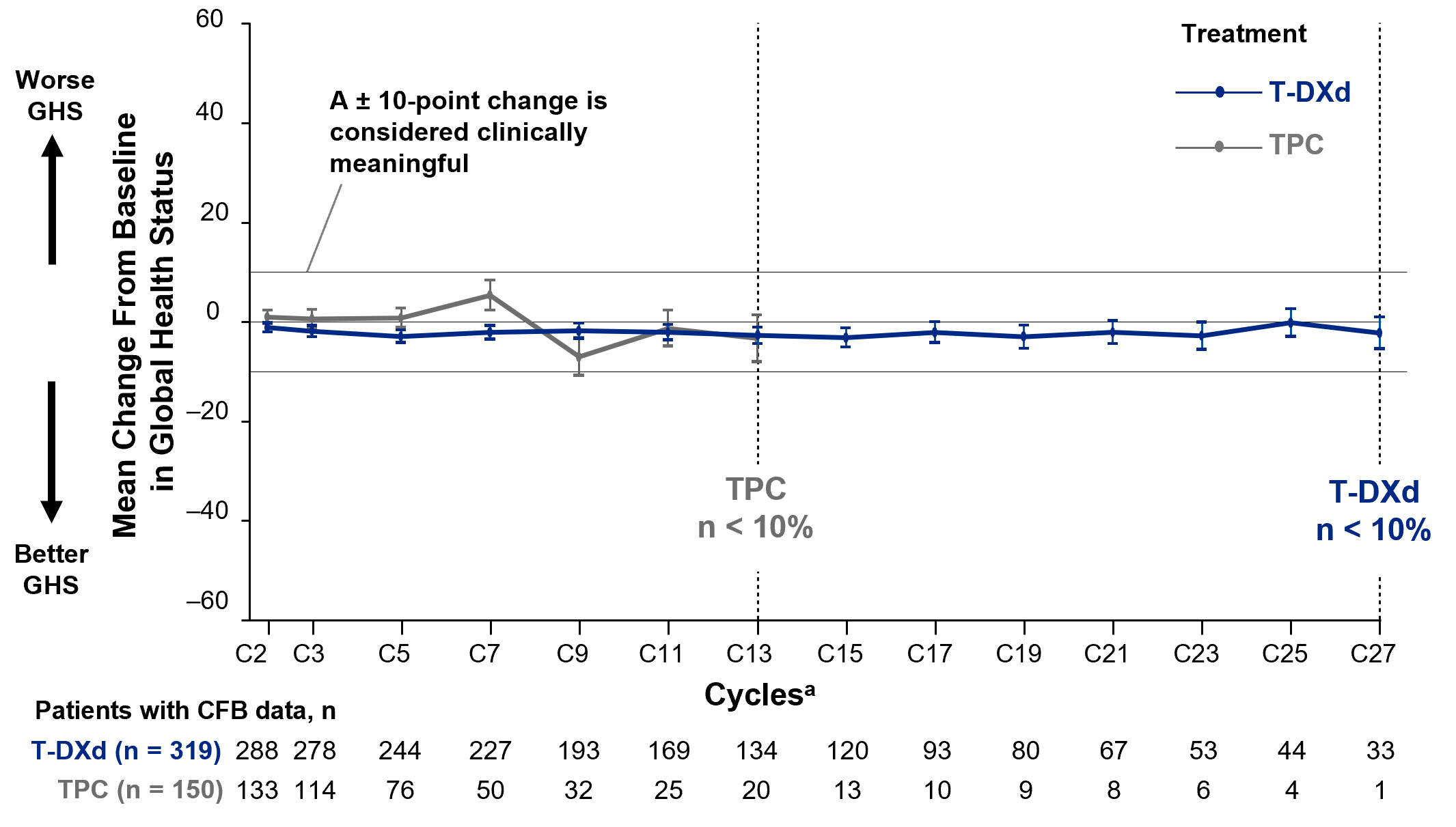
Note: Scores range from 0 to 100; a linear transformation was applied to the raw GHS score; thus, a higher score represents lower ("worse") GHS/overall QoL.
aOn Day 1 of Cycle.
Fatigue remained stable over time with T-DXd and TPC; nausea/vomiting was worse with T-DXd vs TPC (QLQ-C30)
- Fatigue scores remained stable over time in both treatment arms (until CFB data for patients fell below 10% in each arm)
- With T-DXd, an increase in nausea and vomiting scores was only clinically relevant in early cycles, after which scores decreased and remained stable over time (within 10 points of baseline) from Cycle 7 to Cycle 27
-
Mean CFB of EORTC QLQ-C30 Fatigue Subscales in the HR Positive Cohort
-
Mean CFB of EORTC QLQ-C30 Nausea and Vomiting Subscales in the HR Positive Cohort
Mean CFB of EORTC QLQ-C30 Fatigue Subscales in the HR Positive Cohort
Mean CFB of EORTC QLQ-C30 Fatigue Subscales in the HR Positive Cohort.
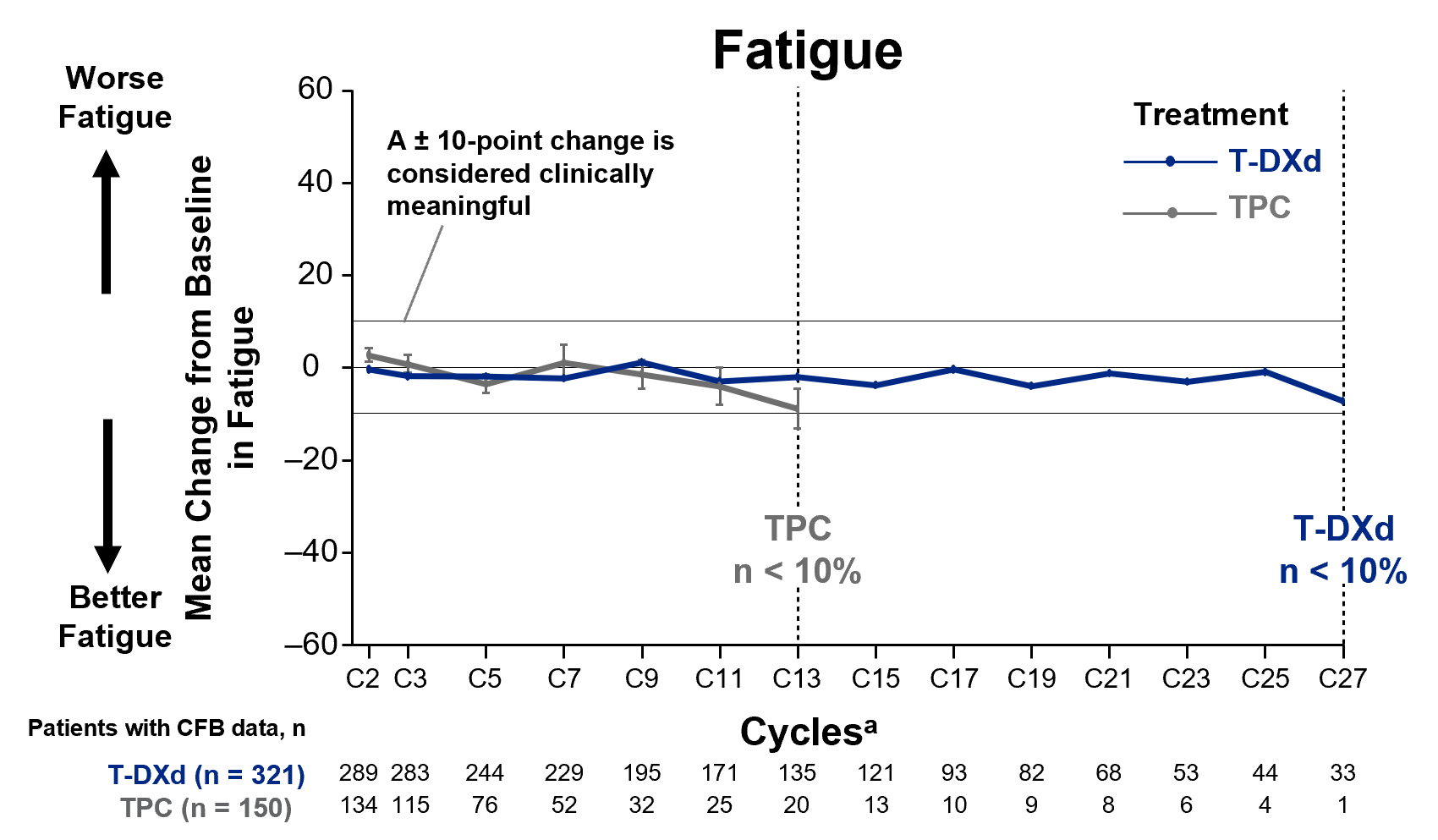
Note: Scores range from 0 to 100; a linear transformation was applied to the raw symptom score, thus a higher score represents lower ("worse") symptom. T-DXd and TPC treatment arms are only comparable through Cycle 13 (until the number of patients with available change from baseline data fell below 10% in the TPC arm). Data in the T-DXd treatment arm are interpretable through Cycle 27 (until the number of patients with available change from baseline data fell below 10%).
aOn Day 1 of Cycle.
Mean CFB of EORTC QLQ-C30 Nausea and Vomiting Subscales in the HR Positive Cohort
Mean CFB of EORTC QLQ-C30 Nausea and Vomiting Subscales in the HR Positive Cohort.
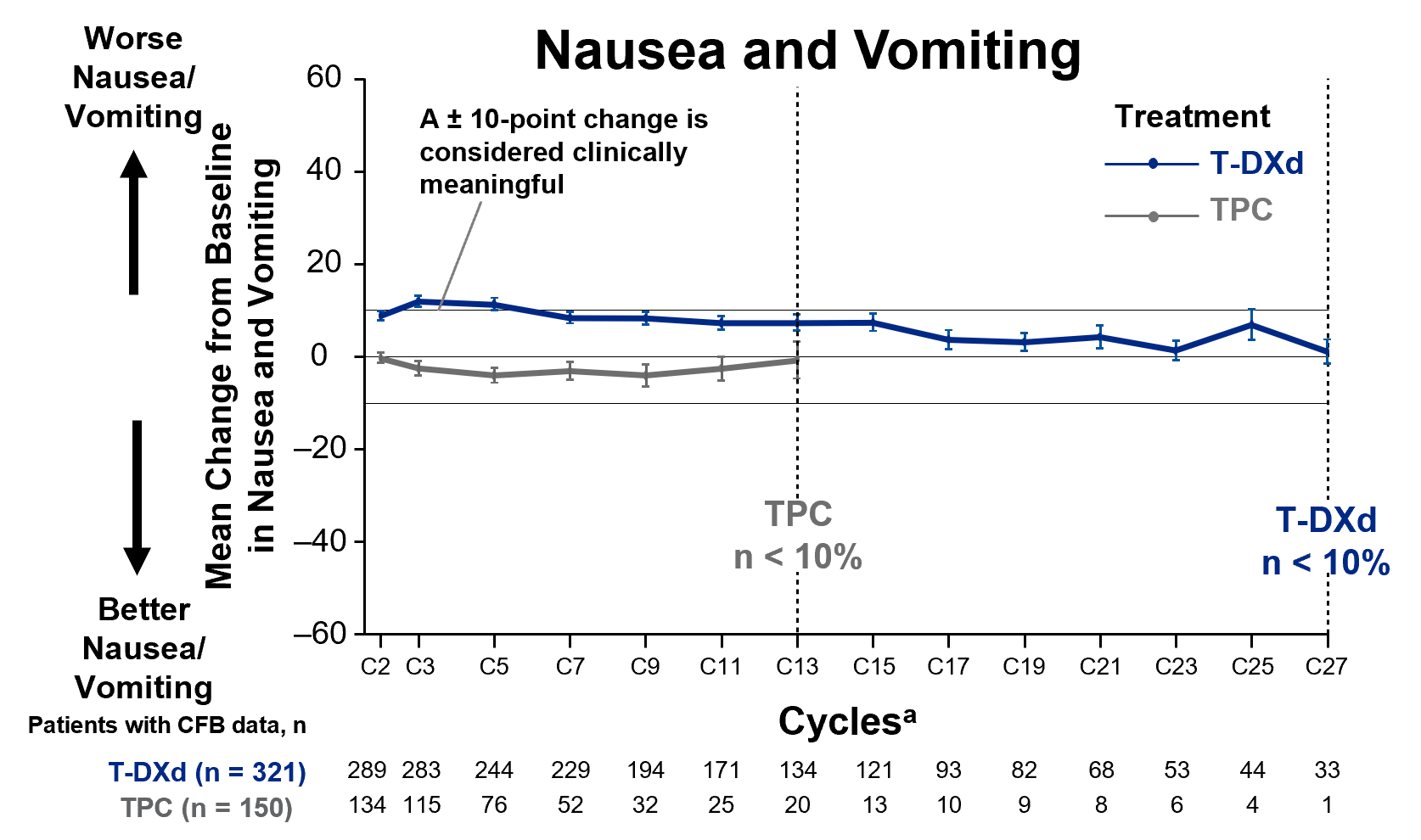
Note: Scores range from 0 to 100; a linear transformation was applied to the raw symptom score, thus a higher score represents lower ("worse") symptom. T-DXd and TPC treatment arms are only comparable through Cycle 13 (until the number of patients with available change from baseline data fell below 10% in the TPC arm). Data in the T-DXd treatment arm are interpretable through Cycle 27 (until the number of patients with available change from baseline data fell below 10%).
aOn Day 1 of Cycle.
Time to Definitive Deterioration
Forest Plot
TDD in PRO measures of interest was overall prolonged in patients receiving T-DXd vs TPC
TDD in PRO measures of interest was overall prolonged in patients receiving T-DXd vs TPC
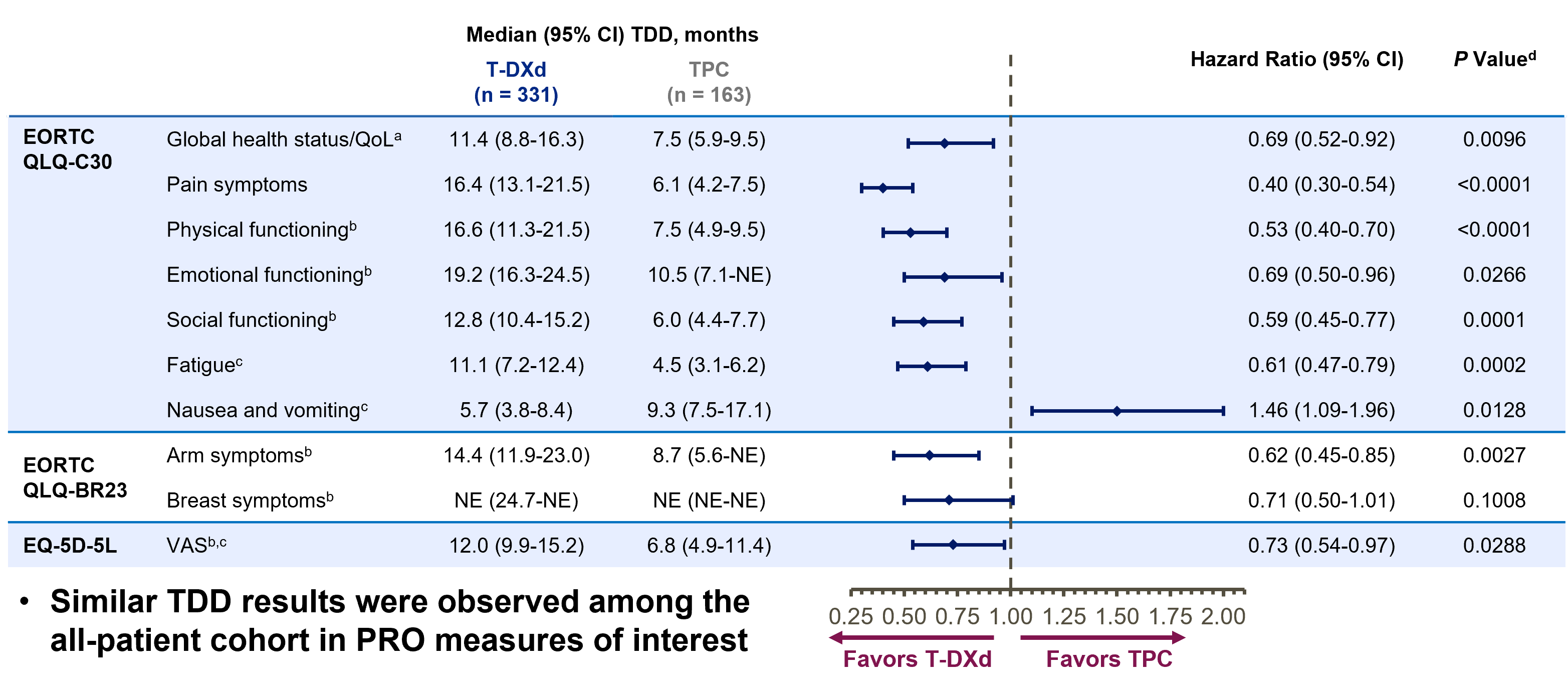
Note: Clinically meaningful definitive deterioration is defined as a change of ≥10 points from baseline at either two or more consecutive time points, last PRO assessment, or death by the first survival follow-up visit.
aPrimary PRO variable of interest; bSecondary PRO variable of interest; cTDD of fatigue, nausea/vomiting, and EQ-5D-5L VAS were exploratory analyses; dNominal P value not adjusted for multiple testing.
Kaplan-Meier Analysis
-
TDD of EORTC QLQ-C30 GHS/QoL in the HR Positive Cohort
-
TDD of EORTC QLQ-C30 Pain Symptoms in the HR Positive Cohort
-
TDD of EORTC QLQ-C30 Nausea and Vomiting Symptoms in the HR Positive Cohort
-
TDD of EORTC QLQ-C30 Fatigue Symptoms in the HR Positive Cohort
-
TDD of EORTC QLQ-BR23 Systemic Therapy Side Effects in the HR Positive Cohort
TDD of EORTC QLQ-C30 GHS/QoL in the HR Positive Cohort
TDD of EORTC QLQ-C30 GHS/QoL in the HR Positive Cohort.
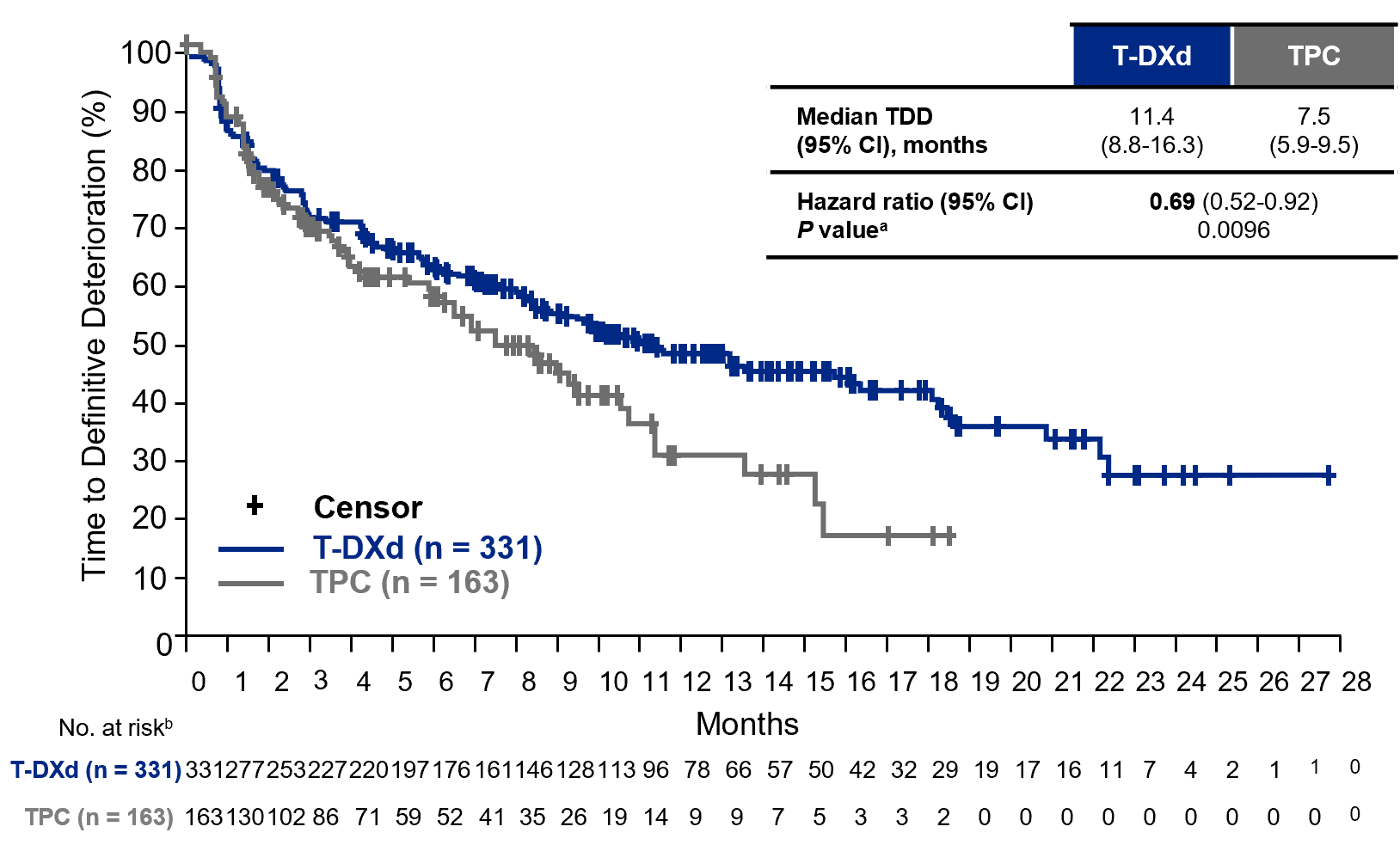
Note: Clinically meaningful definitive deterioration is defined as a change of ≥10 points from baseline at either two or more consecutive time points, last PRO assessment, or death by the first survival follow-up visit.
aNominal P value not adjusted for multiple testing; bAll patients were included in the analysis; patients without baseline assessments were censored per the statistical analysis plan.
TDD of EORTC QLQ-C30 Pain Symptoms in the HR Positive Cohort
TDD of EORTC QLQ-C30 Pain Symptoms in the HR Positive Cohort
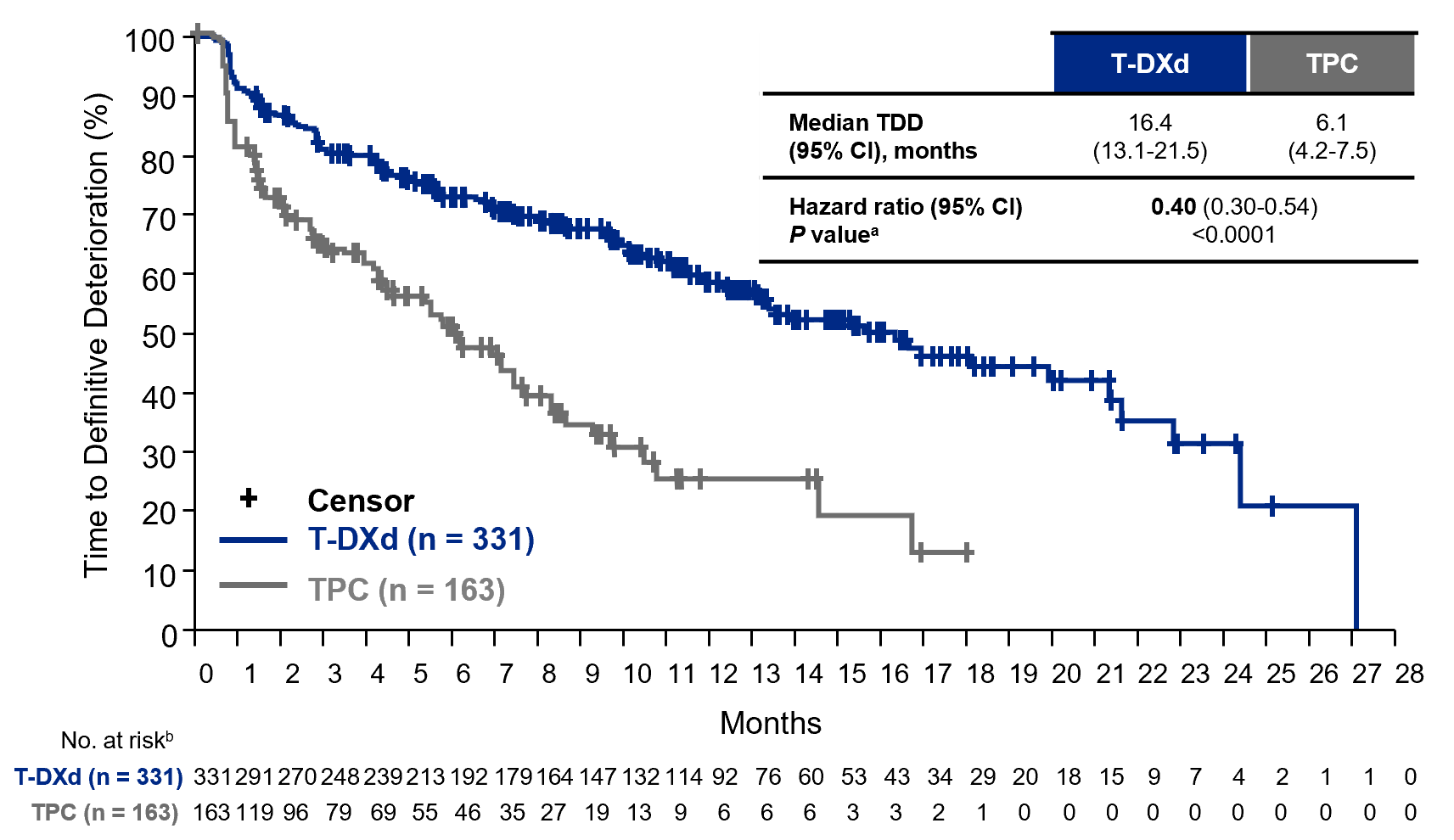
Note: Clinically meaningful definitive deterioration is defined as a change of ≥10 points from baseline at either two or more consecutive time points, last PRO assessment, or death by the first survival follow-up visit.
aNominal P value not adjusted for multiple testing; bAll patients were included in the analysis; patients without baseline assessments were censored per the statistical analysis plan.
TDD of EORTC QLQ-C30 Nausea and Vomiting Symptoms in the HR Positive Cohort
TDD of EORTC QLQ-C30 Nausea and Vomiting Symptoms in the HR Positive Cohort
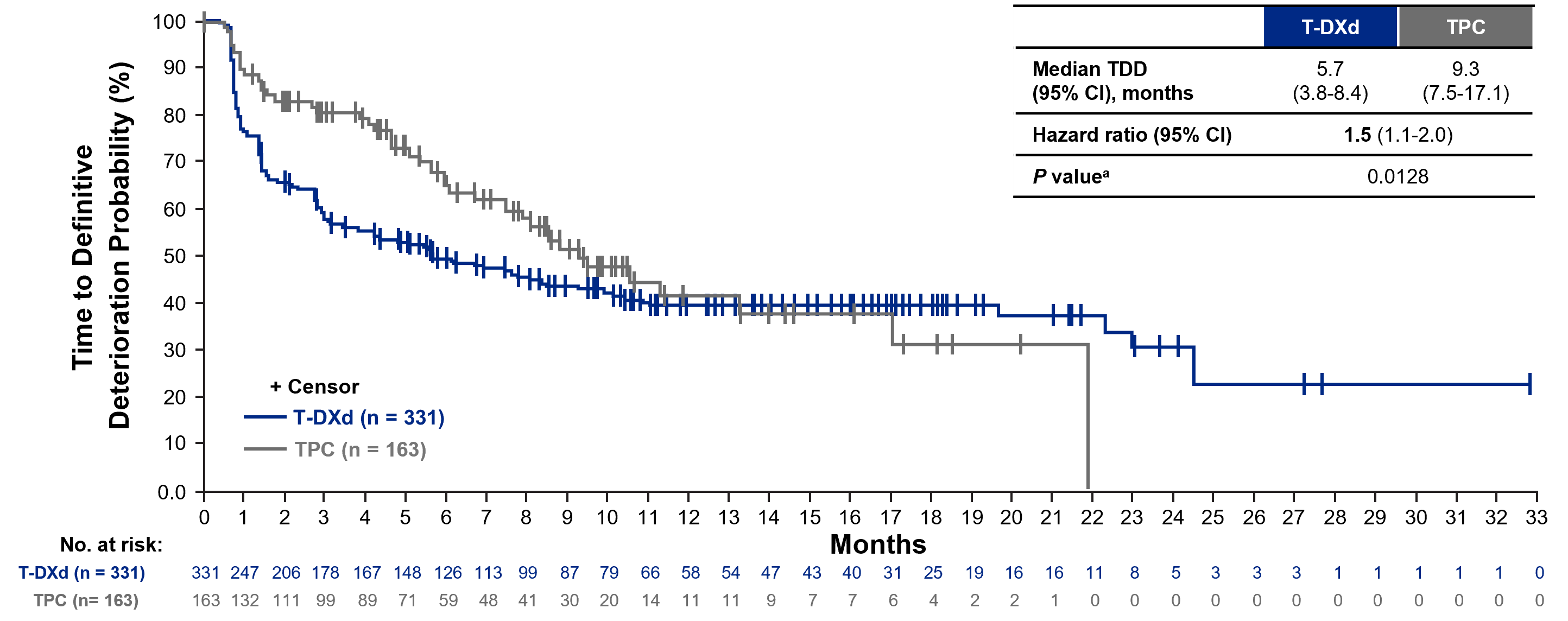
Note: Clinically meaningful definitive deterioration is defined as a change of ≥10 points from baseline at either two or more consecutive time points, last PRO assessment, or death by the first survival follow-up visit.
aNominal P value not adjusted for multiple testing.
TDD of EORTC QLQ-C30 Fatigue Symptoms in the HR Positive Cohort
TDD of EORTC QLQ-C30 Fatigue Symptoms in the HR Positive Cohort
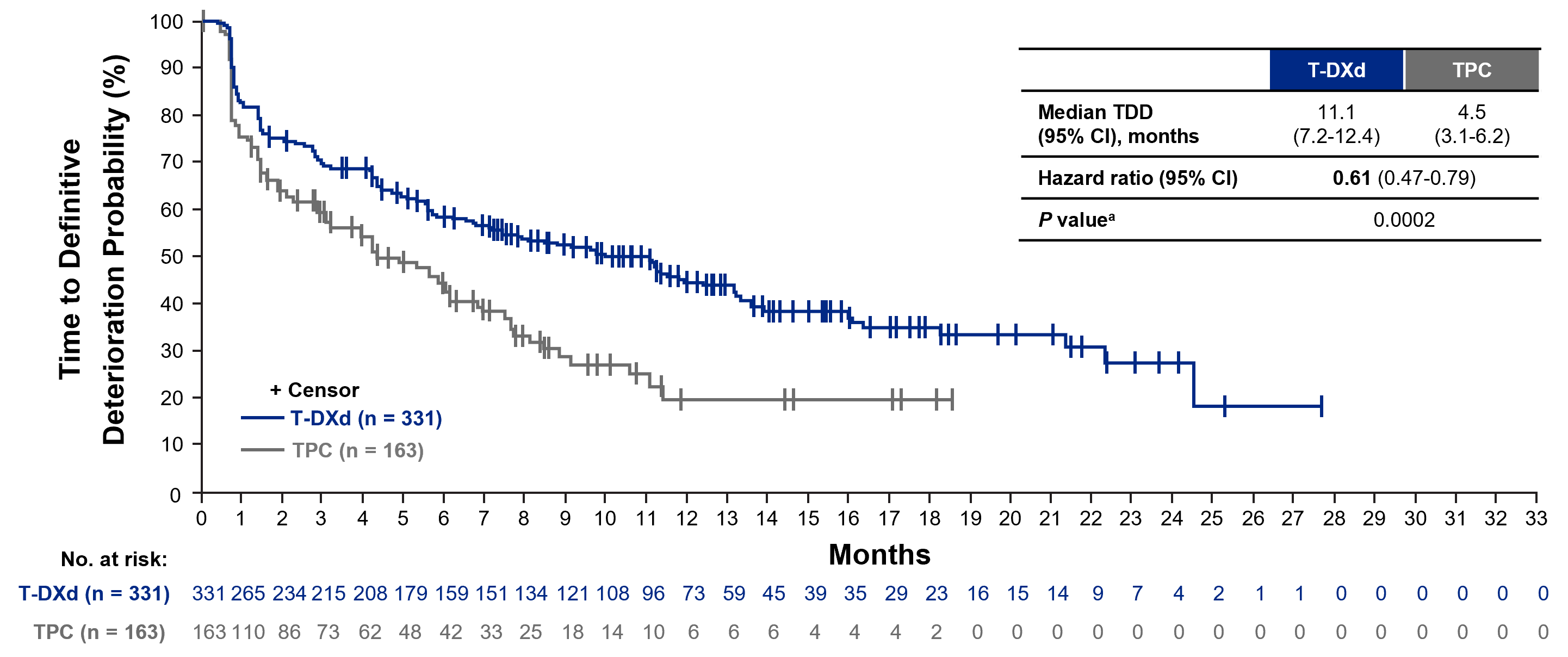
Note: Clinically meaningful definitive deterioration is defined as a change of ≥10 points from baseline at either two or more consecutive time points, last PRO assessment, or death by the first survival follow-up visit.
aNominal P value not adjusted for multiple testing.
TDD of EORTC QLQ-BR23 Systemic Therapy Side Effects in the HR Positive Cohort
TDD of EORTC QLQ-BR23 Systemic Therapy Side Effects in the HR Positive Cohort
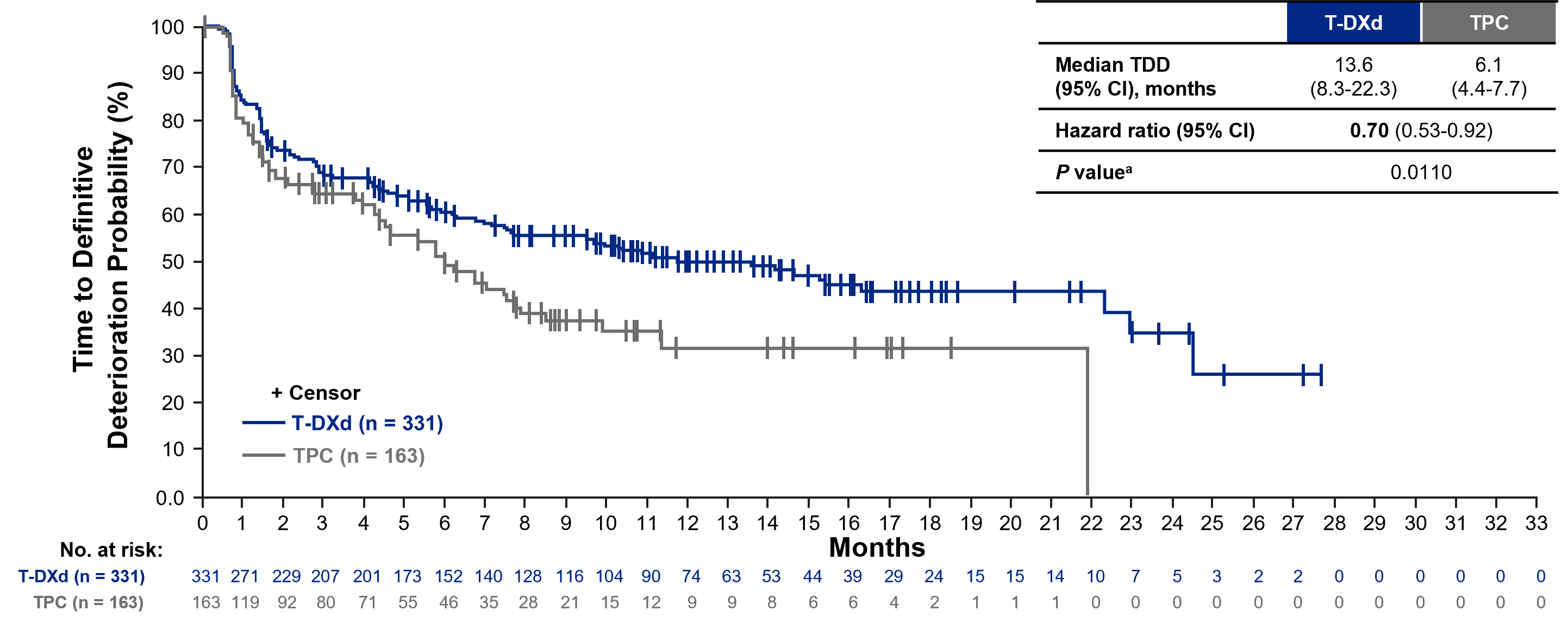
Clinically meaningful definitive deterioration is defined as a change of ≥10 points from baseline at either two or more consecutive time points, last PRO assessment, or death by the first survival follow-up visit.
aNominal P value not adjusted for multiple testing.
Abbreviations
CFB = change from baseline
;DCO = data cutoff
;EORTC QLQ-BR23 = European Organization for Research and Treatment of Cancer Quality of Life Breast Cancer Questionnaire
;EORTC QLQ-C30 = European Organization for Research and Treatment of Cancer Quality of Life Questionnaire-Core 30
;EQ-5D-5L = EuroQol 5-dimension, 5-level questionnaire
;GHS = global health status
;HEOR = health economic outcomes research
;HR = hormone receptor
;NE = not evaluable
;PRO = patient-reported outcome
;QLQ-C30 = Quality of Life Questionnaires Core 30
;QoL = quality of life
;SD = standard deviation
;TDD = time to definitive deterioration
;T-DXd = trastuzumab deruxtecan
;TPC = treatment of physician's choice
;VAS = visual analog scale
References
Document ID: 0ecc6373-81f6-4b23-8e10-3edcd30e370b
Last updated: 06-March-2023

©2023 AstraZeneca. All rights reserved.