



DESTINY-Breast04 Subgroup Analyses: Efficacy Results (January 11, 2022 DCO Date)1,2
-
PFS Subgroup Analysis by BICR (HR Positive Cohort)
-
PFS Subgroup Analyses in All Patients (HR Positive and HR Negative)
-
PFS by Prior CDK4/6i Use
-
PFS is Patients With 1 and ≥2 Prior Lines of Chemotherapy
-
PFS in Patients With HER2 Statuses of IHC 1+ and IHC 2+/ISH−
-
ORR in the HR Positive Cohort and in All Patients
PFS Subgroup Analysis by BICR (HR Positive Cohort)1
PFS Subgroup Analysis by BICR (HR Positive Cohort).1,a
PFS Subgroup Analysis by BICR (HR Positive Cohort).1,a
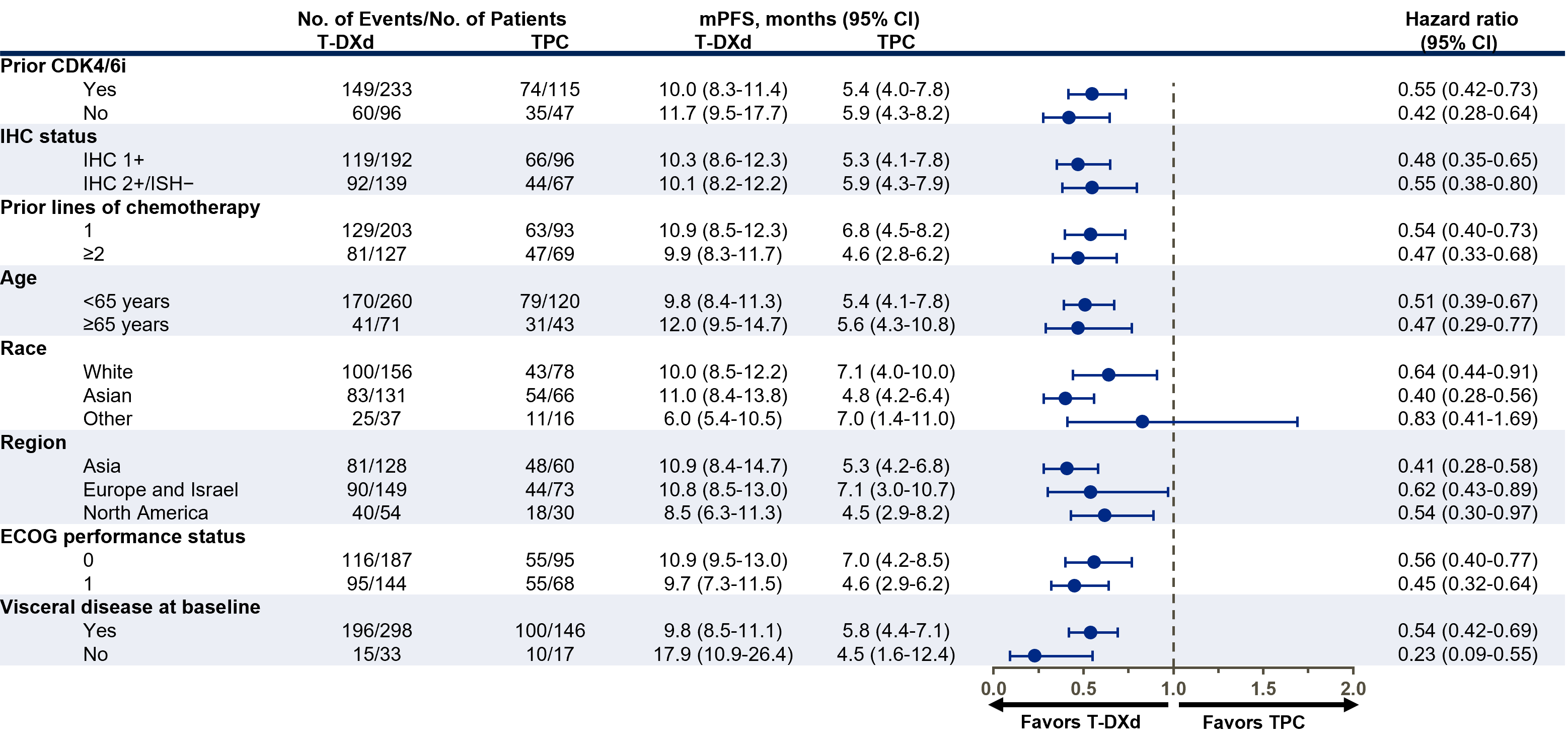
aBased on derived data which includes protocol deviations.
PFS Subgroup Analyses in All Patients (HR Positive and HR Negative)2
PFS Subgroup Analyses in All Patients (HR Positive and HR Negative).2
PFS Subgroup Analyses in All Patients (HR Positive and HR Negative).2
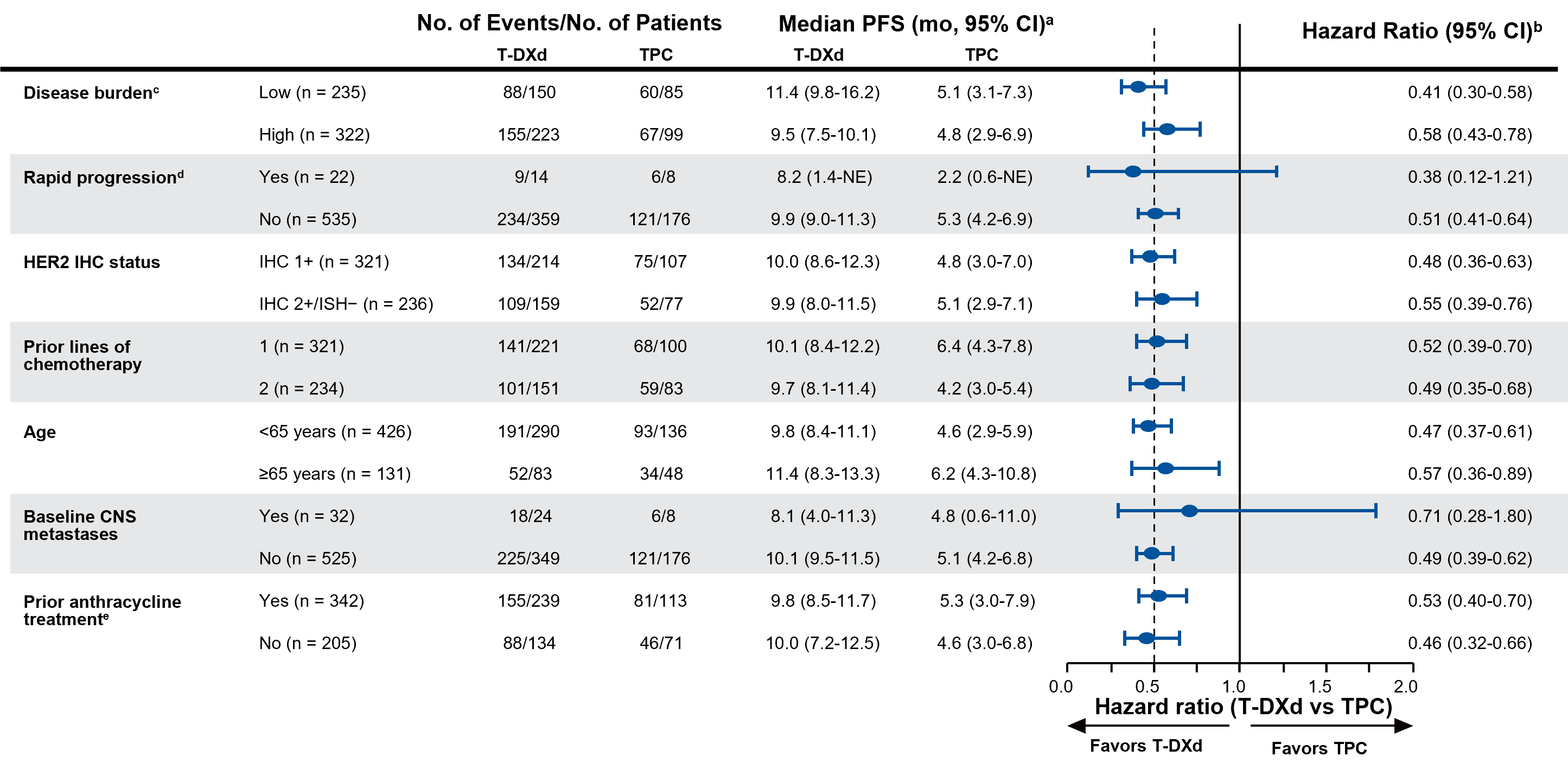
Note: Dashed line at 0.50 represents median PFS for all patients.
aMedian PFS is from Kaplan-Meier analysis. CI for median was computed using the Brookmeyer-Crowley method; bHazard ratio is from unstratified Cox proportional hazards model with treatment as the only covariate; cDisease burden was defined by the number of metastatic disease sites at baseline (low = 0-2; high = 3+). At baseline, 69.8% of patients had liver metastases; dRapid progressor status was defined as disease progression within 6 months of concluding a prior course of chemotherapy in early BC; eDefined as prior anticancer therapy of ‘anthracyclines,’ ‘doxorubicin,’ ‘epirubicin,’ ‘daunorubicin,’ or ‘idarubicin’ in CMDECOD and CMTRT in ADCM.
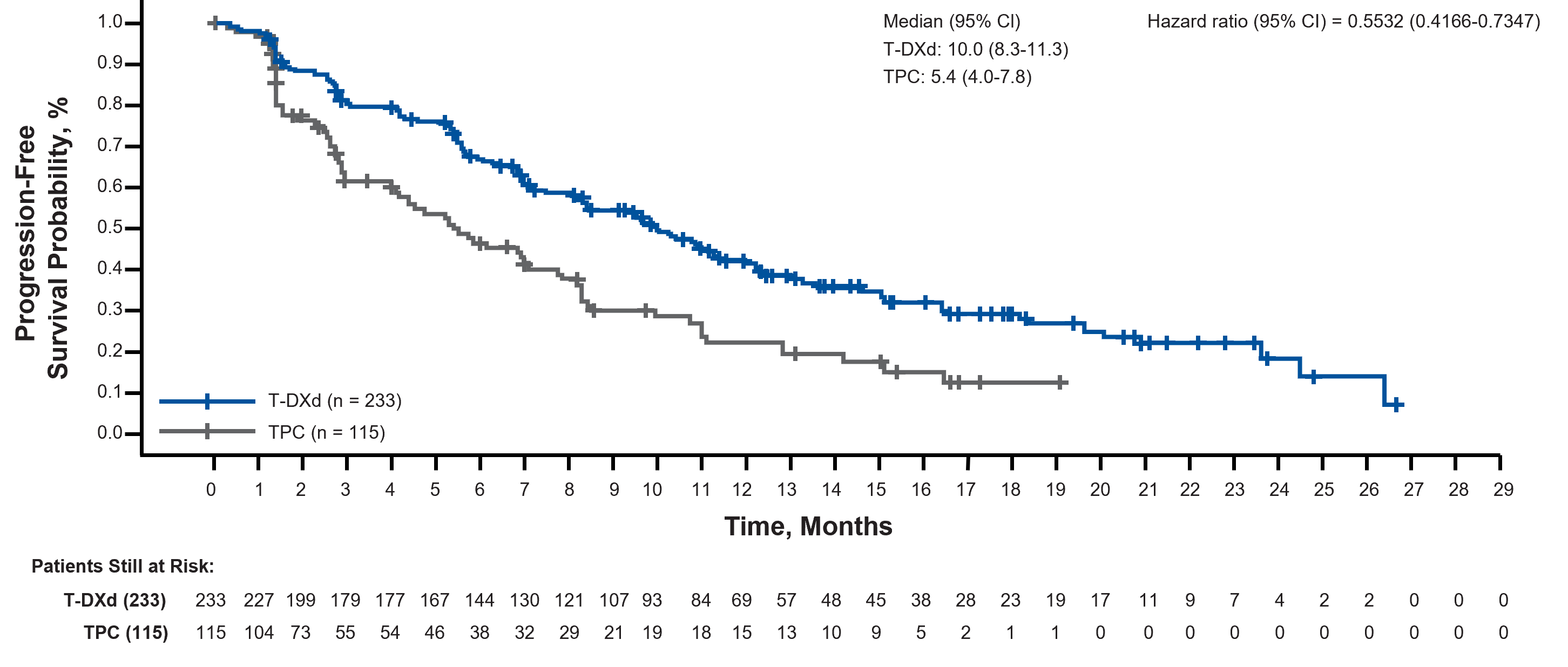
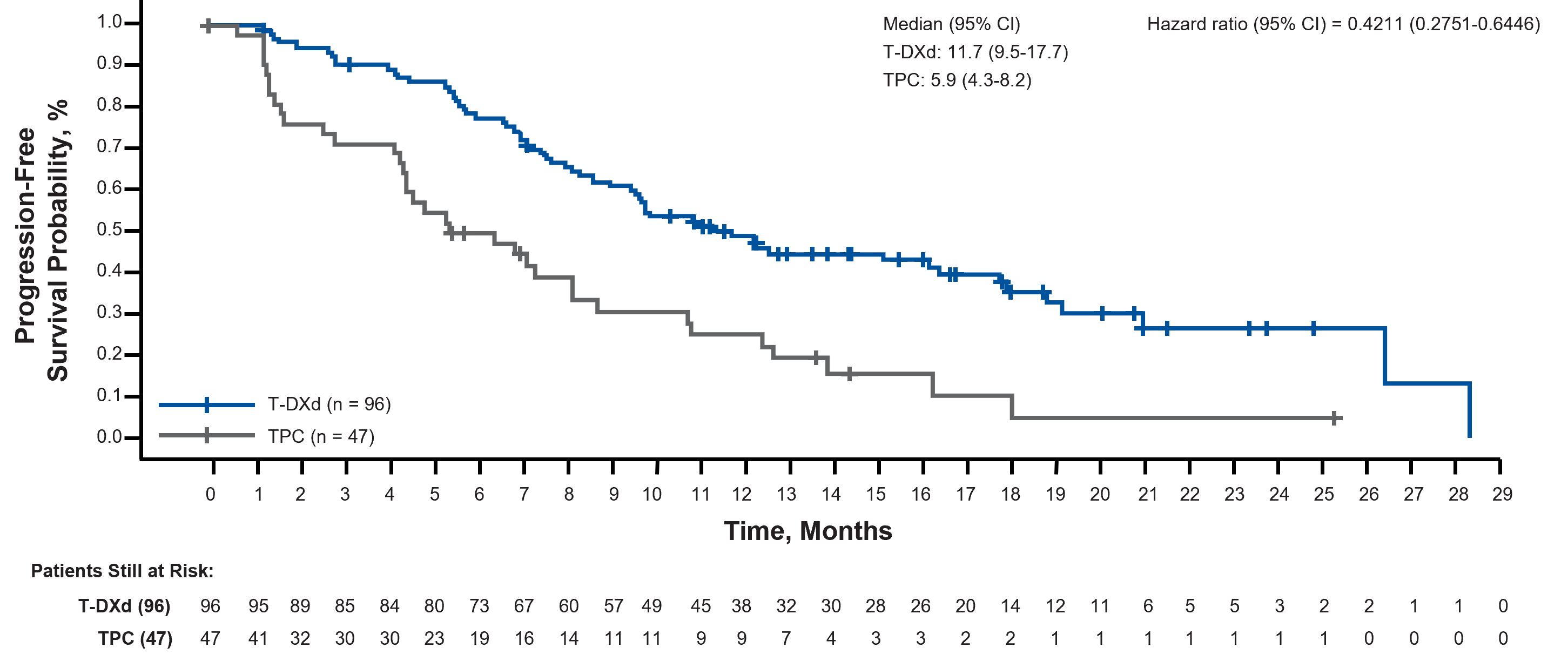
PFS by Prior CDK4/6i Use2
- Prior CDK4/6i Use (HR Positive Cohort)
- No Prior CDK4/6i Use (HR Positive Cohort)
Prior CDK4/6i Use (HR Positive Cohort)2
No Prior CDK4/6i Use (HR Positive Cohort)2
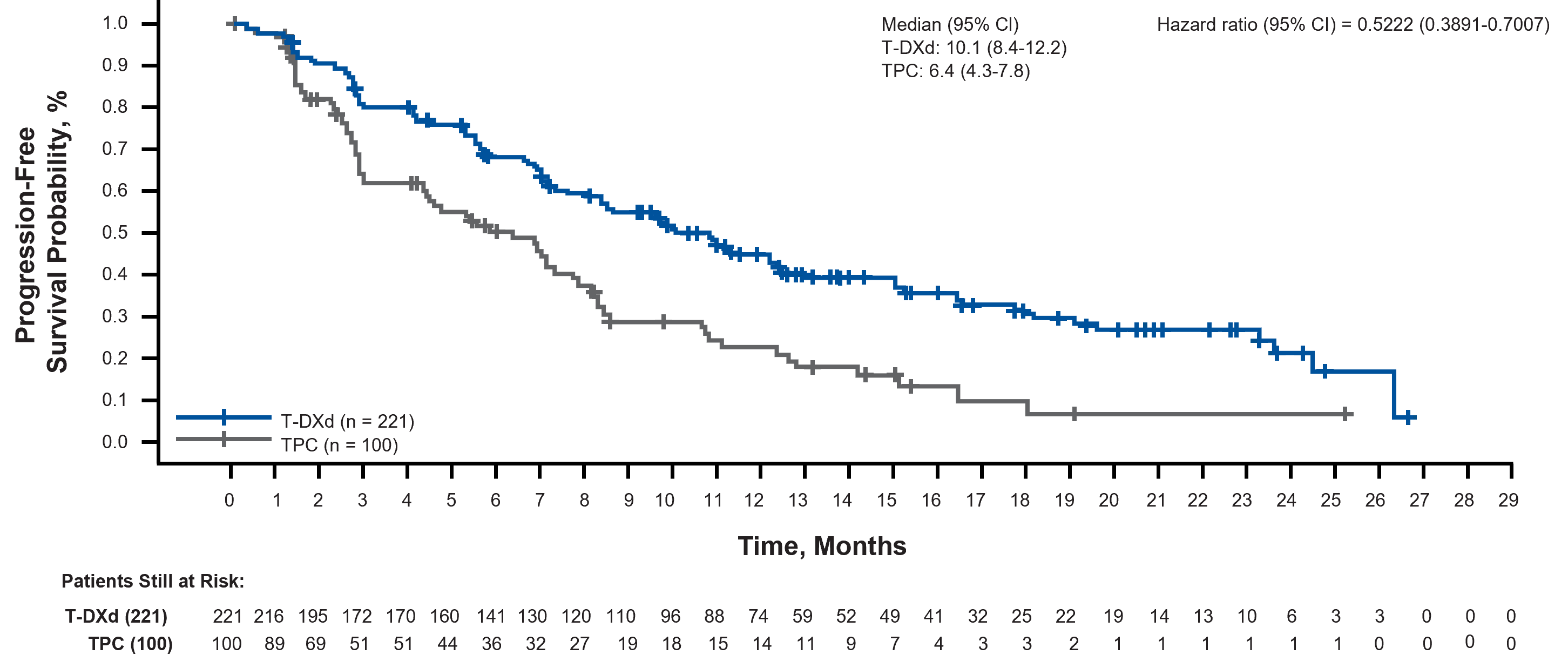
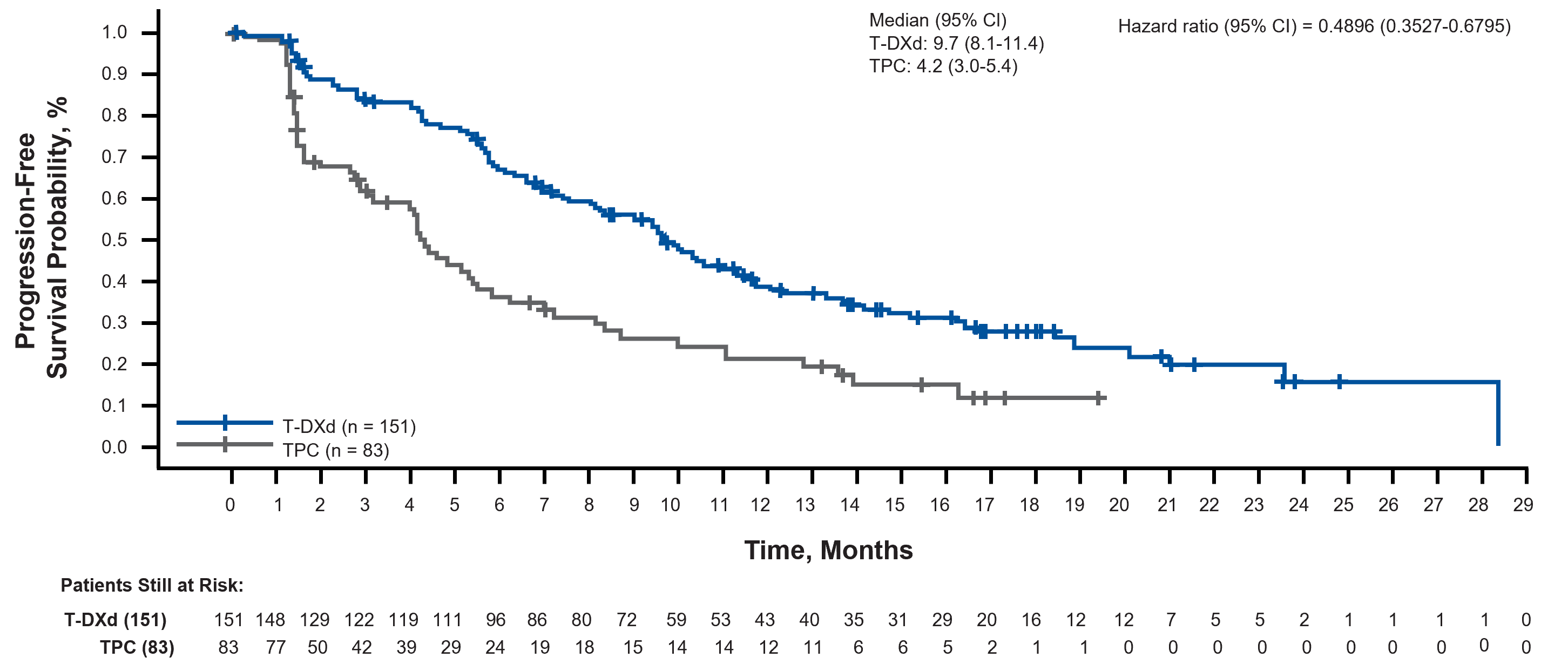
PFS is Patients With 1 and ≥2 Prior Lines of Chemotherapy2
- PFS in Patients Who Received 1 Prior Line of Chemotherapy (All Patients)
- PFS in Patients Who Received ≥2 Prior Lines of Chemotherapy (All Patients).
PFS in Patients Who Received 1 Prior Line of Chemotherapy (All Patients).2
PFS in Patients Who Received ≥2 Prior Lines of Chemotherapy (All Patients).2
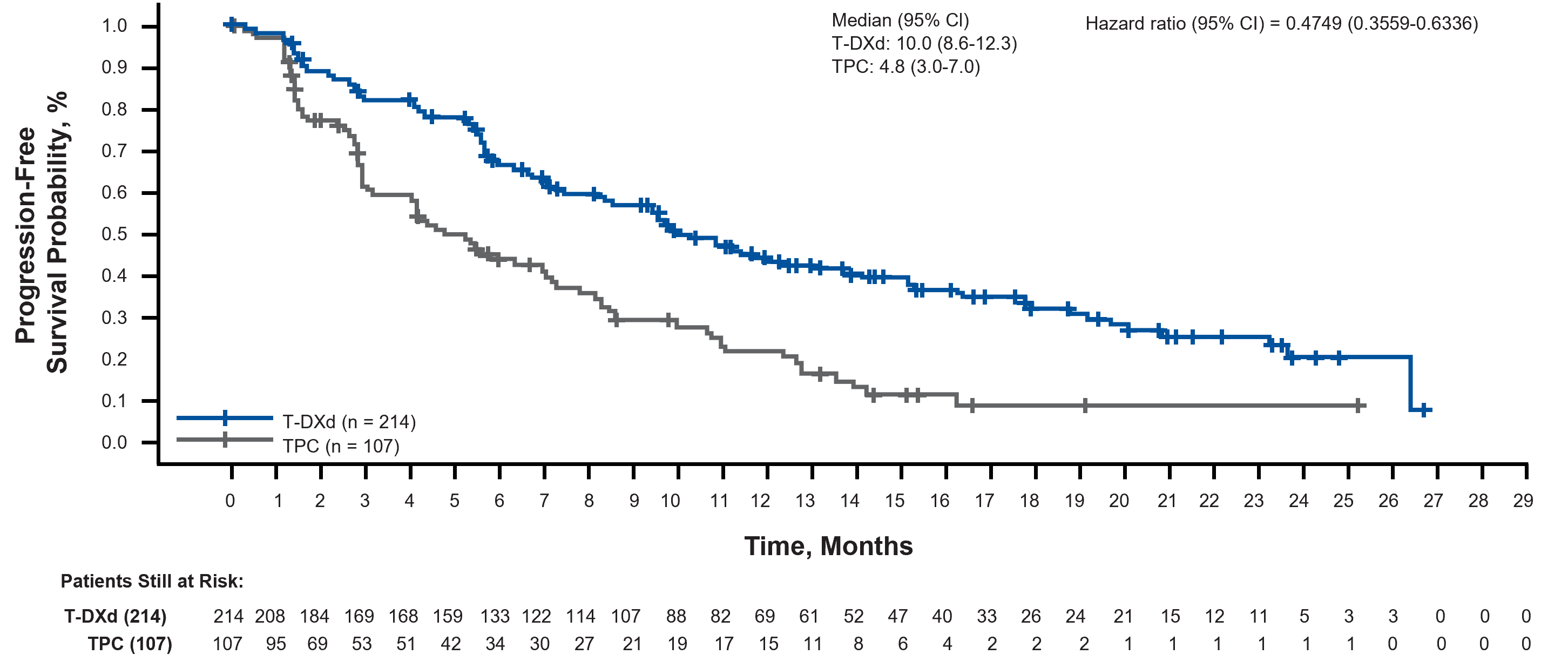
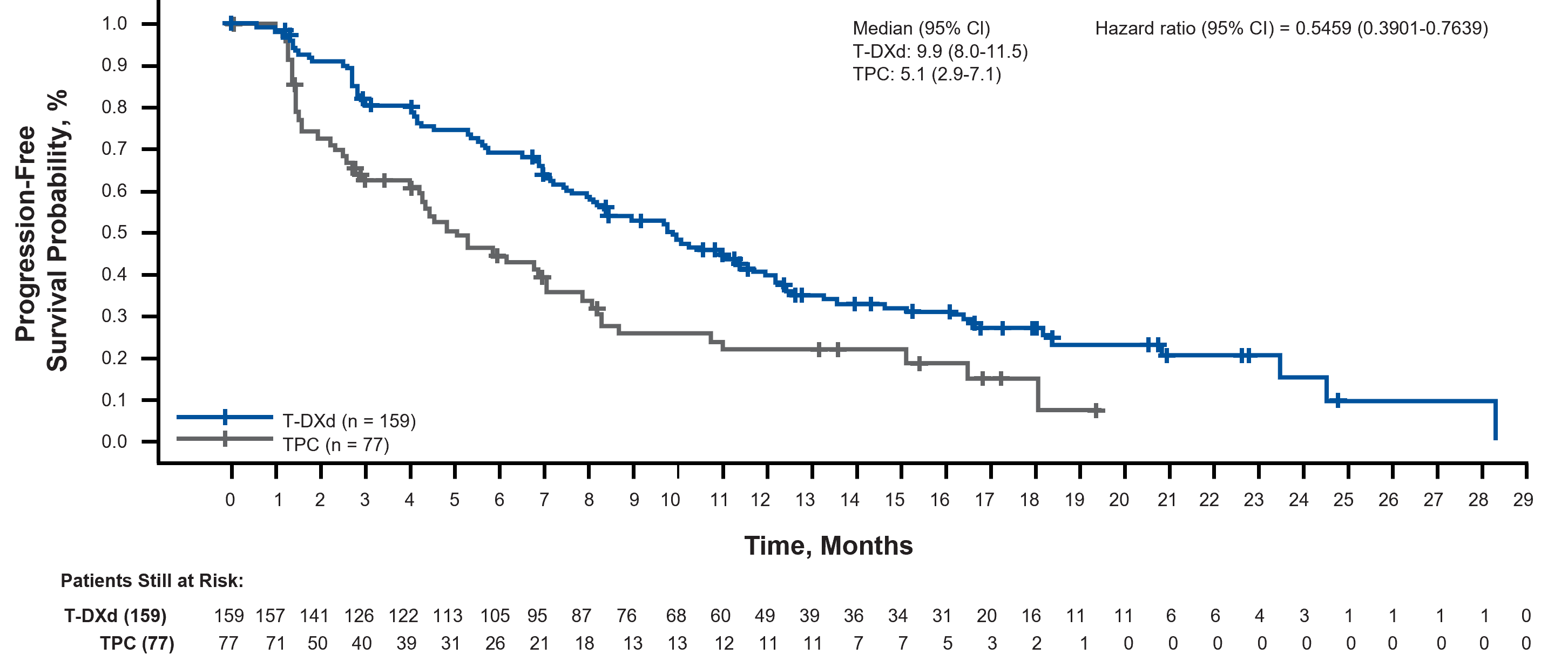
PFS in Patients With HER2 Statuses of IHC 1+ and IHC 2+/ISH−2
- PFS in HER2 IHC 1+ Patients (All Patients)
- PFS in HER2 IHC 2+/ISH− Patients (All Patients)
PFS in HER2 IHC 1+ Patients (All Patients).2
PFS in HER2 IHC 2+/ISH− Patients (All Patients).2
ORR in the HR Positive Cohort and in All Patients2
ORR in the HR Positive Cohort and in All Patients.2
ORR in the HR Positive Cohort and in All Patients.2
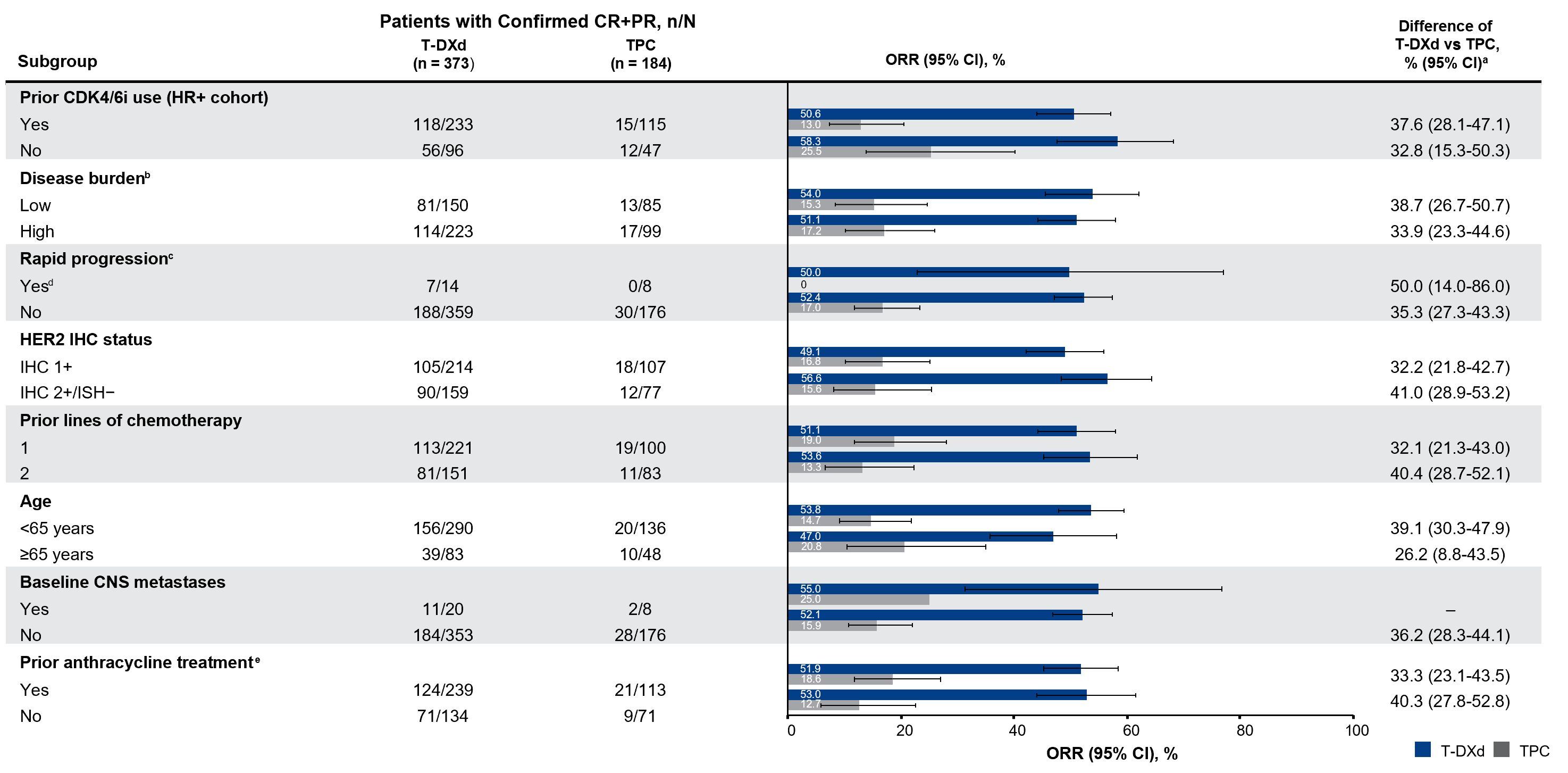
aSubgroup analyses presented only if at least 10 observations in each group; bDisease burden was defined by the number of metastatic disease sites at baseline (low = 0-2; high = 3+). At baseline, 69.8% of patients had liver metastases; cRapid progressor status was defined as disease progression within 6 months of concluding a prior course of chemotherapy in early BC; dAmong patients with rapid progression, 18 were HR+ and 4 were HR-; eDefined as prior anticancer therapy of 'anthracyclines,' 'doxorubicin,' 'epirubicin,' 'daunorubicin,' or 'idarubicin' in CMDECOD and CMTRT in ADCM.
Abbreviations
ADCM = antibody-drug conjugated micelle
;BC = breast cancer
;BICR = blinded independent central review
;CDK4/6i = cyclin-dependent kinase 4/6 inhibitor
;CMDECOD = generic medication name in WHODrug (World Health Organization’s global dictionary)
;CMTRT = verbatim medication name that is either pre-printed or collected on a case report form
;CNS = central nervous system
;CR = complete response
;DCO = data cut-off
;ECOG = Eastern Cooperative Oncology Group
;HER2 = human epidermal growth factor receptor 2
;HR = hormone receptor
;IHC = immunohistochemistry
;ISH = in situ hybridization
;mPFS = median progression-free survival
;mo = months
;ORR = objective response rate
;PFS = progression-free survival
;PR = partial response
;T-DXd = trastuzumab deruxtecan
;TPC = treatment of physician's choice
References
2. Harbeck N, Modi S, Jacot W, et al. Trastuzumab deruxtecan vs treatment of physician’s choice in patients with HER2-low unresectable and/or metastatic breast cancer: subgroup analyses from DESTINY-Breast04 [poster]. Poster presented at: San Antonio Breast Cancer Symposium (SABCS); December 6-10, 2022; San Antonio, TX. Poster P1-11-01.
Document ID: 0ecc6373-81f6-4b23-8e10-3edcd30e370b
Last updated: 06-March-2023
Please note that this content may contain some data and/or patient populations which are considered off-label in your country. Providing this information does not constitute any recommendation for use. AstraZeneca is providing this material as an information service and professional courtesy.
To help us improve our content for health care professionals, please take this short survey.

©2023 AstraZeneca. All rights reserved.